Matic is the first, and to date only, robot vacuum to receive conditional FCC approval under new restrictions affecting certain foreign-made connected devices. Matic’s current robot was already authorized and did not need this approval to remain on sale. Every Matic is assembled in Mountain View, California, and its perception and navigation run entirely on the robot.
What do the new FCC rules mean for robot vacuums?
Last week, the FCC granted Matic conditional approval under new rules restricting certain foreign-made drones, robots, and other connected devices from sale in the United States. Matic is the first, and to date only, robot vacuum to receive this approval.
An important caveat is that our current robot did not actually need approval to stay on the market. Its wireless hardware had already been authorized, and the new restrictions apply primarily to future products.
So why is this news important?
Because we believe these new rules point towards a larger question: how much should you know about the technology you bring into your home?
A robot vacuum sees more than your floors
Modern home robots are connected computers that move through some of the most private spaces in your life.
They use cameras and sensors to understand their surroundings. They build maps so they can navigate. They connect to your network. And as home robots become more capable, they will inevitably understand more about the environments they operate in.
That makes questions like who built it, where it was built, and what happens to its data more important than they might be for a toaster.
Regulators are starting to ask those questions, too. The FCC's new restrictions are part of broader scrutiny of foreign-made connected devices.
We think that scrutiny is reasonable.
We built Matic differently
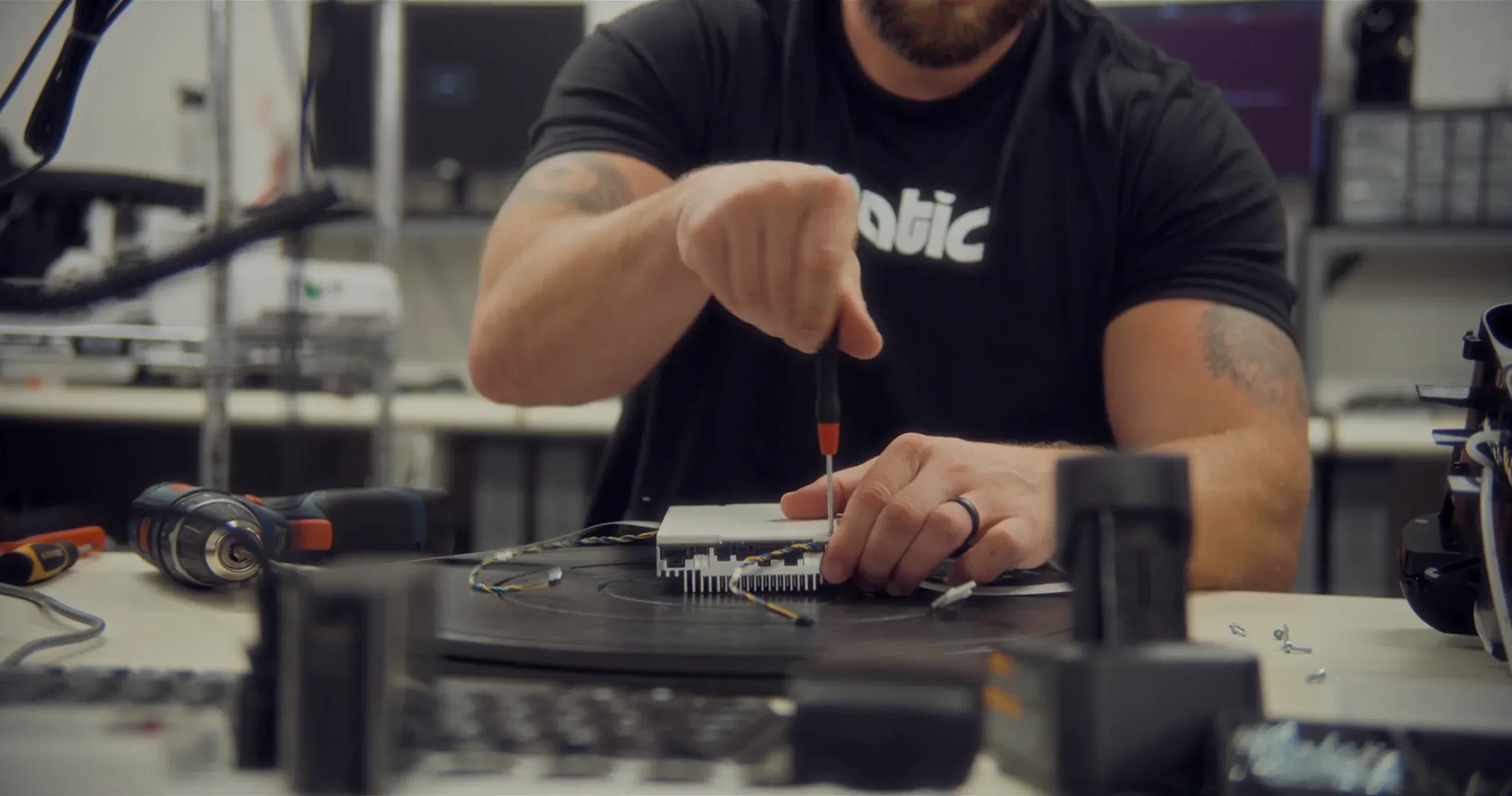
Matic was designed in Silicon Valley, and every Matic is assembled at our production facility in Mountain View, California.
Originally, our engineers and production team shared the same 24,000-square-foot building. As production grew, we moved our R&D team to Menlo Park to devote the entire Mountain View facility to manufacturing.
We are also working to source more of the components inside Matic from U.S. suppliers. Our core compute platform comes from Nvidia, and we source critical components from American companies whenever we can.
That direction is intentional.
Assembling hardware locally is not the easiest way to make a consumer robot. But it lets the people designing, engineering, and manufacturing Matic work unusually closely together, while giving us tighter control over how each robot is built.
Ultimately, this is part of a broader philosophy about what a home robot should be.
Your home shouldn't have to become someone else's data
We designed Matic's intelligence to run entirely on the robot.
Matic does not rely on the cloud for perception or navigation.
The camera data Matic uses to understand and navigate your home stays on-device by default. Maps stay on the robot. Processing happens on the robot. If diagnostic information is ever shared with us, it is because you chose to share it.
That architecture was not an afterthought. We made it a fundamental constraint when building Matic.
Cloud-connected cameras have become ubiquitous enough that it is easy to forget how strange the underlying proposition can be: put a device with eyes inside your home, then trust a distant server with what it sees.
We think home robotics can and should work differently.
As robots become more useful and more capable, the standard should get higher. You should not have to trade privacy for intelligence. You should be able to understand what the machine moving through your home sees, where that information goes, and who controls it.
Building the kind of home robot we want to exist
The FCC approval does not suddenly change how Matic works, where we build it, or whether you can buy one.
However, it does bring attention to choices we have been making for years.
We assemble Matic in California. We are moving more of our supply chain toward U.S. suppliers. We run Matic's perception and navigation entirely on the robot. We are also building toward a future in which home robots can do much more — without requiring you to send more of your home into the cloud.
We’re doing this because we believe that a robot that lives in your home should earn the privilege of being there.
We think where it comes from, and what happens to everything it sees, are good places to start.
Frequently asked questions
Is Matic affected by the FCC's new robot restrictions?
Matic's current robot did not need conditional approval to remain on the market because its wireless hardware had already been authorized. Matic nevertheless became the first, and to date only, robot vacuum to receive conditional approval under the new rules.
Where is Matic made?
Matic is designed in Silicon Valley, and every Matic is assembled at our production facility in Mountain View, California. Matic is currently the only robot vacuum assembled in the U.S., and we are continuing to move more of our supply chain toward U.S. suppliers.
Does Matic send camera data to the cloud?
Matic does not rely on the cloud for perception or navigation. Camera data and maps stay on-device by default. Diagnostic and training data is shared with Matic only if you choose to share it.
Why do the FCC's new rules affect robot vacuums?
Robot vacuums are connected devices that use wireless hardware and increasingly sophisticated sensors and compute. The FCC's new restrictions apply to certain foreign-made drones, robots, and other connected devices seeking authorization for sale in the United States. That includes robot vacuums.